What the ‘Staples Baddie’ Viral Moment Teaches Brands About Modern PR
In early 2026, a Staples print specialist unexpectedly became one of TikTok’s latest viral personalities. Known online as the “Staples Baddie,” her short-form videos showcasing print services and tutorials of undiscovered office products transformed an ordinary office retail store into an internet phenomenon. What began as casual short videos to pass the time and show off some of the lesser-known services at Staples, quickly evolved into widespread organic exposure for a brand not typically associated with Gen Z digital culture.
While the moment may appear simple, it offers a case study in modern public relations. The viral success of the “Staples Baddie” demonstrates how employee-driven content, when handled strategically, can function as powerful earned media. It also can strengthen brand authenticity while reflecting the evolving relationship between corporations and online audiences.
Kaeden Rowland, on TikTok goes by @blivxx, is a 22-year-old print specialist when she began posting TikTok videos highlighting the services offered at Staples. These included direct mail services, custom mugs, printed art, planners and specialty products many consumers were unaware the company provided. Her content is humorous, confident, and culturally fluent which connects with TikTok’s Gen Z audience. By blending product demos mixed with personal flair has made people unexpectedly interested in office supplies and printing services they’d never thought about. As some videos reached millions of views, audiences began referring to her as the “Staples Baddie,” turning her into a recognizable online persona.
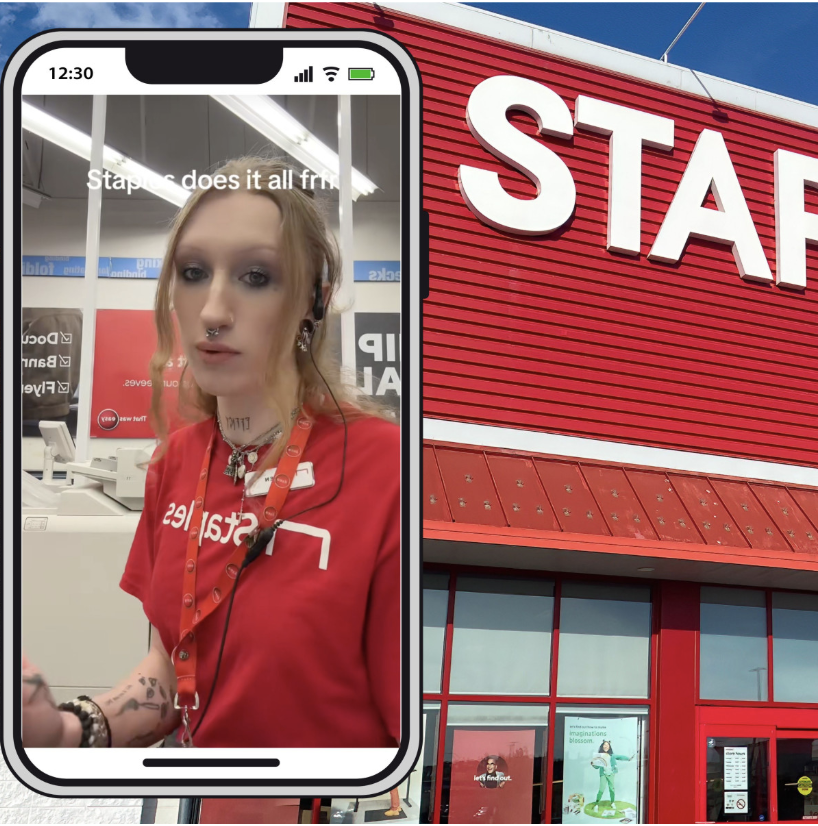
‘Staples Baddie’ Kaeden Rowland explaining in her 15 second TikTok the different amenities are available at Staples.
Compared to a coordinated corporate campaign, the content appeared organic and self-initiated. This shifts things for modern public relations professionals. Brands often fail on social media when they attempt to replicate traditional advertising formats in digital spaces. Highly produced content can coin the terms “performative” and “inauthentic”. In contrast, Rowland’s content succeeded because it did not feel like an advertisement, it felt like a peer-to-peer guidance video on TikTok. Her videos showed no affiliated links or paid partnerships, which leads audiences to perceive them as informative rather than persuasive, driving in engagement. From a PR strategy perspective, this illustrates the importance of cultural intelligence and platform literacy.
Rather than reacting negatively or attempting to remove the content, Staples official social media and corporate marketing teams have engaged positively with the attention and even seen commenting with her content. By acknowledging the viral moment without commercializing it, it allowed positive feedback from their audiences and customers. The brand allowed the moment to evolve naturally signaling awareness to Staples authenticity.
Viral employee content can present risks, including brand guideline breach or reputational concerns. Many organizations have fallen victim to viral videos on social media which have negativity ruined their brand. This led to default restricted measures in maintaining message control. However, Staples approached the situation strategically, monitoring audiences and amplifying the positive attention rather than suppressing it. In doing so, the company converted an unpredictable moment into a viral capital.
Traditionally, corporations relied heavily through controlled paid advertising channels. In contrast, the “Staples Baddie” moment represents decentralized brand storytelling. Audiences related because Rowland is a working employee rather than cosplaying as one. When audiences see a relatable individual behind a brand, parasocial interaction increases, strengthening emotional engagement. The viral moment functioned as earned media, gaining public attention organically as opposed to a paid promotion. Earned media is heavily out weighted because it is perceived as more credible. This credibility is rooted in authenticity. In today’s digital environment, audiences are highly resistant to persuasive intent. When commercials seem obviously motivated, viewers resist. Rowland’s content prioritized entertainment and relatability over direct sales messaging, promoting genuine informational purpose.
Staples is not typically associated with viral internet culture. However, through this moment, the brand gained relevance among younger audiences. Rowland’s personality humanized the organization, shifting perceptions from “office supply retailer” to a brand with cultural awareness and personality. This demonstrates how employee voices can reshape public perception. Employees and consumers now co-create brand narratives in real time, shifting organizations to no longer fully control the conversation. Instead, they must listen, adapt and respond strategically.
In an era where audiences trust individuals more than institutions, the viral success of the “Staples Baddie” worked because it combined authenticity, earned media dynamics, cultural fluency, and calculated corporate restraint. Sometimes the most effective brand ambassadors may already be within the organization.
